


Description
-
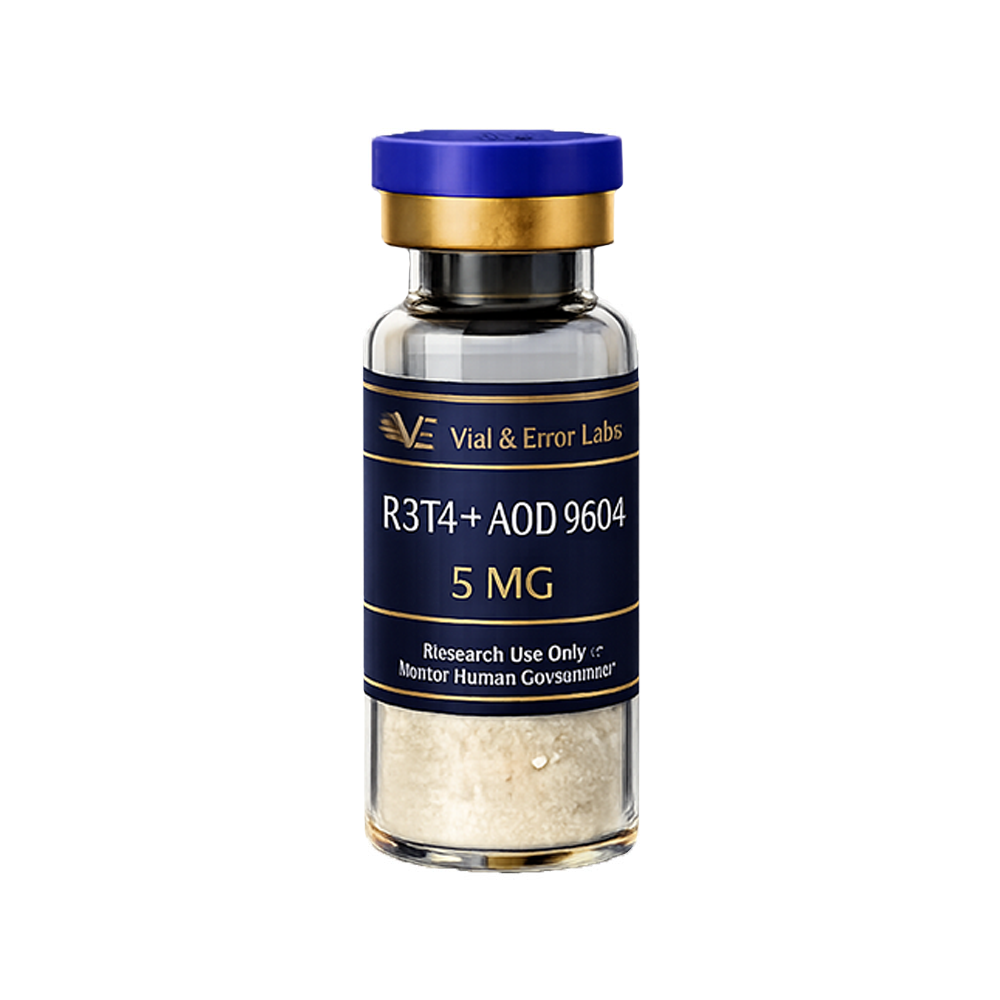
About Retatrutide + AOD-9604
This blend combines Retatrutide, AOD-9604 for controlled laboratory investigation where multi-target signaling is being characterized. Researchers may examine how these components map onto multi-pathway incretin signaling and adjacent pathways under standardized assay conditions. Common study themes include energy balance and nutrient partitioning, visceral adipose tissue biology, and metabolic adaptation over time across in‑vitro and non-clinical research models.
Formulation choices can support comparative experiments, helping teams evaluate pathway selectivity, kinetics, and assay reproducibility. Documentation such as SDS/MSDS and lot-specific analysis may be reviewed prior to handling. This material is provided strictly for research use only and is not intended for human or veterinary consumption.
COMMON RESEARCH APPLICATIONS
Triple Incretin + Lipolysis Pathway Co-Activation
Used in 3T3-L1 adipocyte and hepatocyte models to study simultaneous GIPR/GLP-1R/GCGR activation (retatrutide component) alongside AOD-9604-mediated β₃-AR lipolytic signaling, enabling characterization of additive vs. synergistic lipid mobilization and energy expenditure pathway responses.Hepatic Steatosis & Lipid Oxidation Research
Used in HepG2 and AML12 hepatocyte models under lipid overload conditions to study the combined effect of triple incretin receptor activation and β-HSD-inhibitor-like lipolytic signaling on PPAR-α/CPT1A fatty acid oxidation, TG accumulation reduction, and FGF21 secretion.Hypothalamic Appetite & Energy Balance Circuit Studies
Used in hypothalamic neuronal models (N41, GT1-7) to study triple GLP-1R/GIPR/GCGR agonist-driven POMC/CART upregulation and NPY/AgRP suppression in the arcuate nucleus alongside AOD-9604-associated GH pathway modulation for integrated appetite-metabolism axis research.Combination Metabolic Agent Benchmarking
Benchmarked in parallel with individual components (retatrutide alone, AOD-9604 alone, and semaglutide) and against other combination approaches (CagriSema, tirzepatide) to characterize the specific receptor combination contributions to lipid mobilization, appetite suppression, and metabolic pathway endpoints. -
Chemical Identity
Compound Name: Retatrutide + AOD-9604
Internal Catalog Code: Retatrutide + AOD-9604
CAS Number: 2381089-83-2; 221231-10-3
Molecular Formula: C221H342N46O68 • XNa; C78H123N23O23S2
Molecular Weight: 4731.3; 1815.08 g/mol
Physical Properties
Form/Appearance: Lyophilized powder
Quality & Testing
Purity: As listed on lot-specific COA
Testing Method : HPLC (as applicable) · identity confirmation per COA
Verification
COA: Lot-specific, included with order (QR on label)
Handling & Storage
Storage Temperature: −20°C (long-term) · 4°C (short-term)
Light Sensitivity: Protect from light
Moisture: Store desiccated when applicable
Available Strengths: 5 mg
SKU (5 mg): VE-RETA-AOD-BLEND
-
-
What is this product?
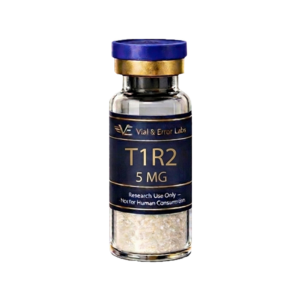
R3T4 + AOD-9604 is supplied as Lyophilized powder material intended for laboratory research use only.
-
What information is available for documentation and verification?
Safety documentation is provided via the SDS/MSDS link. A Certificate of Analysis (COA) link may be provided when available. Always review documentation before handling.
-
What are the key chemical identifiers?
Primary identifier details (where available): CAS 2381089-83-2 (Retatrutide); 221231-10-3 (AOD-9604), molecular weight 4731.30 g/mol; 1815.08 g/mol.
-
How is it typically handled in a lab setting?
Follow standard laboratory PPE and chemical hygiene practices. Consult the SDS/MSDS for hazards, storage, and handling guidance for your specific facility SOPs.
-
Where can I read more about the compound(s)?
See the references below for chemical records and literature search pages.
-
Shipping & handling (research materials)
Orders are packaged to protect vials in transit and shipped with tracking where available. Inspect shipments upon arrival and contact support promptly if items arrive damaged or incomplete.
-
What is a COA and why does it matter?
A Certificate of Analysis (COA) is batch-associated documentation that summarizes analytical testing (e.g., identity/purity methods and results). Use the COA link on the product page to review the documentation available for research transparency.
-
What is this product?
Reviews
There are no reviews yet.