


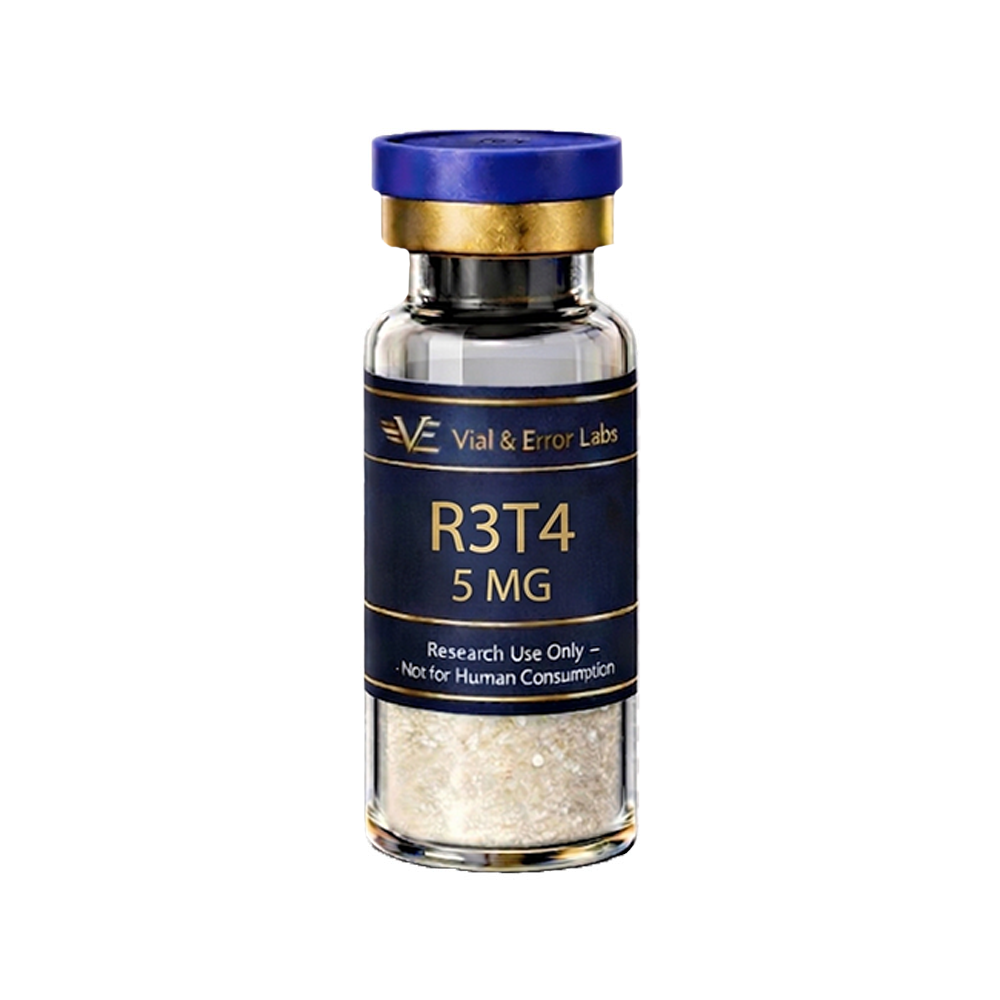
Description
-
About Retatrutide (GGG triple agonist / LY3437943)
Retatrutide — also known as LY3437943 (CAS 2381089-83-2) — is a first-in-class triple GIP/GLP-1/glucagon receptor agonist under development by Eli Lilly. As the most pharmacologically complex of the incretin-class peptides currently in development, it simultaneously activates three metabolic receptors: GIPR, GLP-1R, and the glucagon receptor (GCGR). The addition of GCGR agonism to the dual GIP/GLP-1 mechanism of tirzepatide theoretically drives greater hepatic glucose output suppression and energy expenditure — making retatrutide a key tool compound for dissecting the individual and combined contributions of all three receptors in metabolic signaling models. Supplied as lyophilized peptide for non-clinical research use only.
COMMON RESEARCH APPLICATIONS
Triple Incretin Receptor Pharmacology
Simultaneous activation of GIPR, GLP-1R, and GCGR. Used to study combined vs. individual receptor contributions to cAMP signaling, insulin secretion, and glucagon suppression in pancreatic β-cell (INS-1, MIN6) and hepatocyte (HepG2) models.Hepatic Glucose Metabolism Research
GCGR component modulates hepatic gluconeogenesis and glycogenolysis. Used in hepatocyte models alongside selective GCGR antagonists to isolate hepatic receptor contribution to glucose output and lipid oxidation.Comparative Incretin Cascade Studies
Benchmark triple agonism vs. semaglutide (GLP-1R selective) and tirzepatide (GIP/GLP-1 dual) in the same experimental system to quantify the additive effect of GCGR co-activation on downstream metabolic markers.Energy Expenditure Pathway Studies
GCGR activation drives thermogenesis and mitochondrial uncoupling in brown adipose tissue models; used to study UCP1 expression and fatty acid oxidation pathways as a complement to GLP-1R-mediated appetite signaling. -
Chemical Identity
Compound Name: Retatrutide
Synonyms: LY3437943 · GGG triple agonist · GIP/GLP-1/glucagon triple receptor agonist
CAS Number: 2381089-83-2
EC Number: N/A (synthetic peptide)
Molecular Formula: C₁₉₈H₃₁₁N₅₃O₆₀
Molecular Weight: 4731.30 g/mol
Physical Properties
Appearance: White to off-white lyophilized powder
Solubility (water): ~1 mg/mL in sterile water or PBS (pH 7.4)
Solubility (organic): Soluble in DMSO (~5 mg/mL)
Hygroscopic: Yes — store desiccated
Quality & Testing
Purity: ≥98% (HPLC)
Testing Method : Reverse-phase HPLC · MS confirmation · sequence verification
Verification
COA: Lot-specific, included with order (QR on label)
SDS Supplier : See SDS/MSDS · OSHA HCS / GHS compliant
Handling & Storage
Storage Temperature: Store desiccated at −20°C long-term; 2–8°C short-term. Protect from light. Refer to SDS/COA for compound-specific handling.
Light Sensitivity: Protect from light
Reconstitution: Dissolve in sterile water or PBS (pH 7.4); avoid repeated freeze-thaw cycles
Available Strengths: 5 mg · 10 mg · 15 mg · 20 mg · 30 mg · 40 mg · 60 mg
SKU (5 mg): VE-RETA-005
SKU (10 mg): VE-RETA-010
SKU (15 mg): VE-RETA-015
SKU (20 mg): VE-RETA-020
SKU (30 mg): VE-RETA-030
SKU (40 mg): VE-RETA-040
SKU (60 mg): VE-RETA-060
-
-
What is this product?
Retatrutide (LY3437943) is supplied as a lyophilized triple GIP/GLP-1/glucagon receptor agonist peptide (CAS 2381089-83-2, MW 4731.30 g/mol) for laboratory research use only. It is among the most potent and mechanistically complex incretin peptides currently studied.
-
What purity and testing methods are used?
Each lot is tested by reverse-phase HPLC and MS confirmation to ≥98% purity with sequence verification. A lot-specific COA is included with every order, accessible via QR code on the label.
-
What are the key chemical identifiers?
CAS 2381089-83-2 · Molecular formula C₁₉₈H₃₁₁N₅₃O₆₀ · MW 4731.30 g/mol · Synonyms: LY3437943, GGG triple agonist, GIP/GLP-1/glucagon triple receptor agonist.
-
How does retatrutide differ from tirzepatide?
Tirzepatide co-activates GLP-1R and GIPR (dual agonist). Retatrutide adds glucagon receptor (GCGR) agonism as a third target, adding hepatic glucose and energy expenditure pathways on top of the incretin mechanism. This makes retatrutide useful for studies specifically examining GCGR contribution to metabolic outcomes.
-
How is retatrutide reconstituted for research use?
Dissolve in sterile water or PBS (pH 7.4) at ~1 mg/mL. DMSO (~5 mg/mL) may be used for organic applications. Store desiccated at −20°C. Avoid repeated freeze-thaw cycles. Protect from light.
-
What is the recommended storage upon receipt?
Store immediately at −20°C desiccated upon receipt. Short-term at 2–8°C is acceptable. Do not leave at room temperature. Inspect vials for integrity and contact support if damaged.
-
What is a COA and why does it matter?
A COA documents lot-specific purity (HPLC ≥98%), identity (MS confirmation), and sequence verification. Each lot ships with a QR-accessible COA. Review before use to confirm identity and purity meet your research needs.
-
What is this product?
Reviews
There are no reviews yet.