


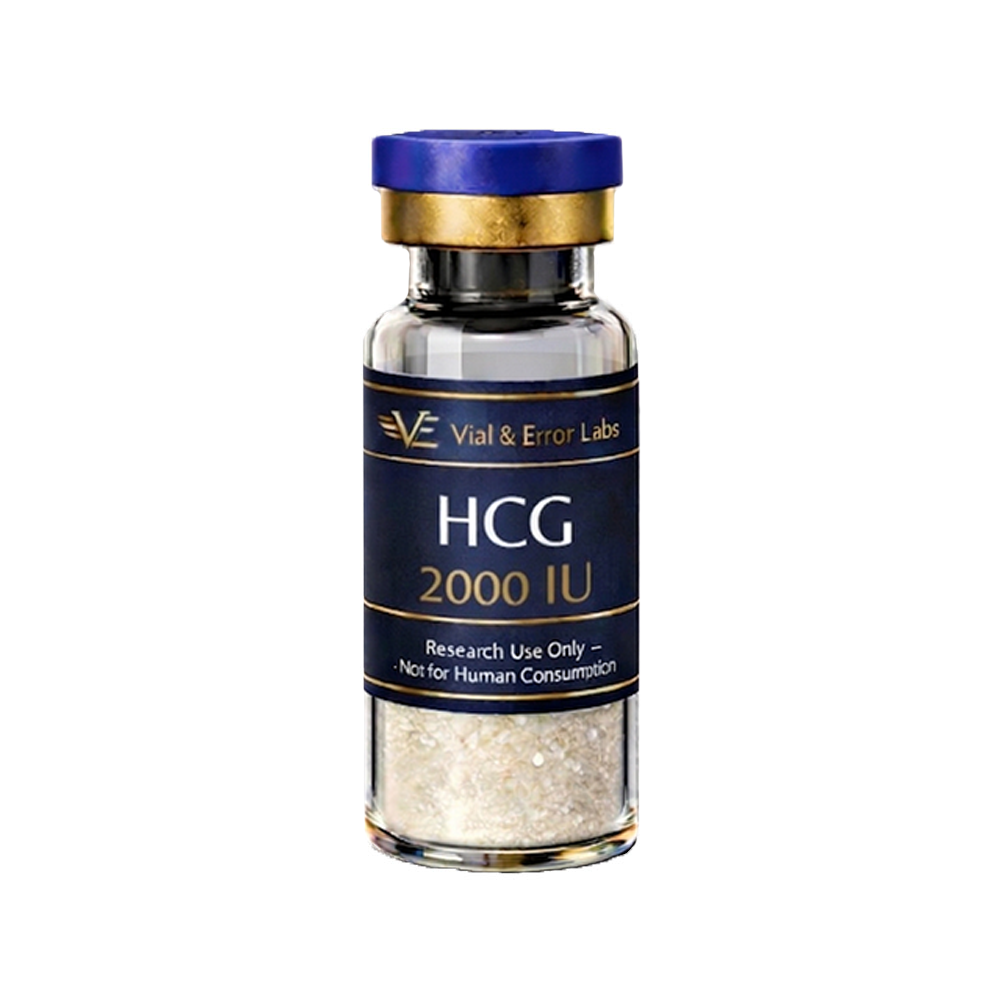
Description
-
About HCG
Human Chorionic Gonadotropin (hCG, CAS 9002-61-3) is a heterodimeric glycoprotein hormone (~36,700 g/mol) consisting of a non-covalently associated α-subunit (shared with LH, FSH, and TSH) and a unique hCG β-subunit that confers LH-receptor binding specificity. It is supplied as a laboratory-grade lyophilized preparation intended strictly for analytical and non-clinical research applications.
HCG is the most potent natural ligand for the LH/hCG receptor (LHCGR), a Gs-coupled GPCR expressed on Leydig cells, theca cells, and corpus luteum. Due to its substantially longer half-life than LH (~24–36 hours versus ~20 minutes for pituitary LH), hCG has become the standard tool compound in LHCGR pharmacology and steroidogenesis research. Researchers use hCG in Leydig cell (MA-10, MLTC-1), granulosa cell, and primary gonadal cell models to study LHCGR signaling (cAMP/PKA, ERK1/2), steroidogenic acute regulatory protein (StAR) activation, testosterone and progesterone biosynthesis pathway mapping, and receptor internalization kinetics.
COMMON RESEARCH APPLICATIONS
LHCGR Pharmacology & Steroidogenesis Research
Primary LHCGR agonist in MA-10, MLTC-1, and primary Leydig cell models. Used to study cAMP/PKA-mediated steroidogenic pathway activation, StAR protein expression, CYP11A1/CYP17A1 enzyme induction, and testosterone biosynthesis kinetics.Granulosa Cell & Ovarian Signaling
Used in KGN and primary granulosa cell models to study LH surge-mimicking LHCGR activation, progesterone synthesis (HSD3B2, CYP11A1 induction), and ERK1/2 co-signaling in luteinization pathway research.LHCGR Receptor Internalization & Desensitization Studies
Prolonged half-life vs. pituitary LH makes hCG the preferred tool for studying LHCGR internalization kinetics, β-arrestin recruitment, and receptor downregulation in sustained agonist exposure models.Comparative Gonadotropin Pharmacology
Reference standard for comparing LHCGR activation potency and downstream signaling between hCG and recombinant LH (rLH); used in dose-response studies, receptor binding competition assays, and steroidogenesis pathway benchmarking. -
Chemical Identity
Compound Name: HCG
Internal Catalog Code: HCG
CAS Number: 9002-61-3
Molecular Formula: Glycoprotein
Molecular Weight: ~36,700 g/mol
Physical Properties
Form/Appearance: Lyophilized powder
Quality & Testing
Purity: As listed on lot-specific COA
Testing Method : HPLC (as applicable) · identity confirmation per COA
Verification
COA: Lot-specific, included with order (QR on label)
Handling & Storage
Storage Temperature: Store desiccated at −20°C for long-term; 2–8°C short-term. Protect from light. Refer to SDS/COA for compound-specific handling.
Light Sensitivity: Protect from light
Moisture: Store desiccated when applicable
Available Strengths: 2000 mg · 5000 mg · 10000 mg
SKU (2000 mg): VE-HCGX-2000
SKU (5000 mg): VE-HCGX-5000
SKU (10000 mg): VE-HCGX-10000
-
-
What is this product?
HCG (human chorionic gonadotropin, CAS 9002-61-3, ~36,700 g/mol) is supplied as a lyophilized heterodimeric glycoprotein hormone for laboratory research use only. It is the standard LHCGR agonist in gonadal steroidogenesis research. Available as VE-HCGX-2000 (2,000 IU), VE-HCGX-5000 (5,000 IU), and VE-HCGX-10000 (10,000 IU).
-
What purity and testing methods are used?
Each lot is tested for biological activity (IU potency assay), identity confirmation, and glycoprotein integrity. A lot-specific COA documenting potency (IU) and identity is included with every order, accessible via QR code on the label.
-
What are the key chemical identifiers?
CAS 9002-61-3 · Glycoprotein (α+β heterodimer) · MW ~36,700 g/mol · Synonyms: human chorionic gonadotropin, hCG, choriogonadotropin, LH/hCG receptor agonist.
-
Why is hCG used instead of LH in receptor signaling research?
hCG has a substantially longer half-life (~24–36 h) compared to pituitary LH (~20 min) due to additional O-linked oligosaccharides on the β-subunit CTP region. This pharmacokinetic advantage makes hCG the preferred LHCGR agonist for sustained receptor stimulation protocols, steroidogenesis time-course studies, and in vitro Leydig/granulosa cell assays where controlled, prolonged receptor activation is required.
-
What is the recommended storage upon receipt?
Store lyophilized material at −20°C in a desiccated environment. Short-term 2–8°C acceptable for active use. Inspect vials for integrity upon receipt. Once reconstituted, use promptly or store per COA guidance.
-
What is a COA and why does it matter?
A COA documents lot-specific potency (IU), identity, and biological activity. For glycoprotein hormones like hCG, potency in International Units is the critical quality parameter — not simply chemical purity. Each lot ships with a QR-accessible COA. Review before use to confirm potency meets your assay requirements.
-
What is this product?
Reviews
There are no reviews yet.