


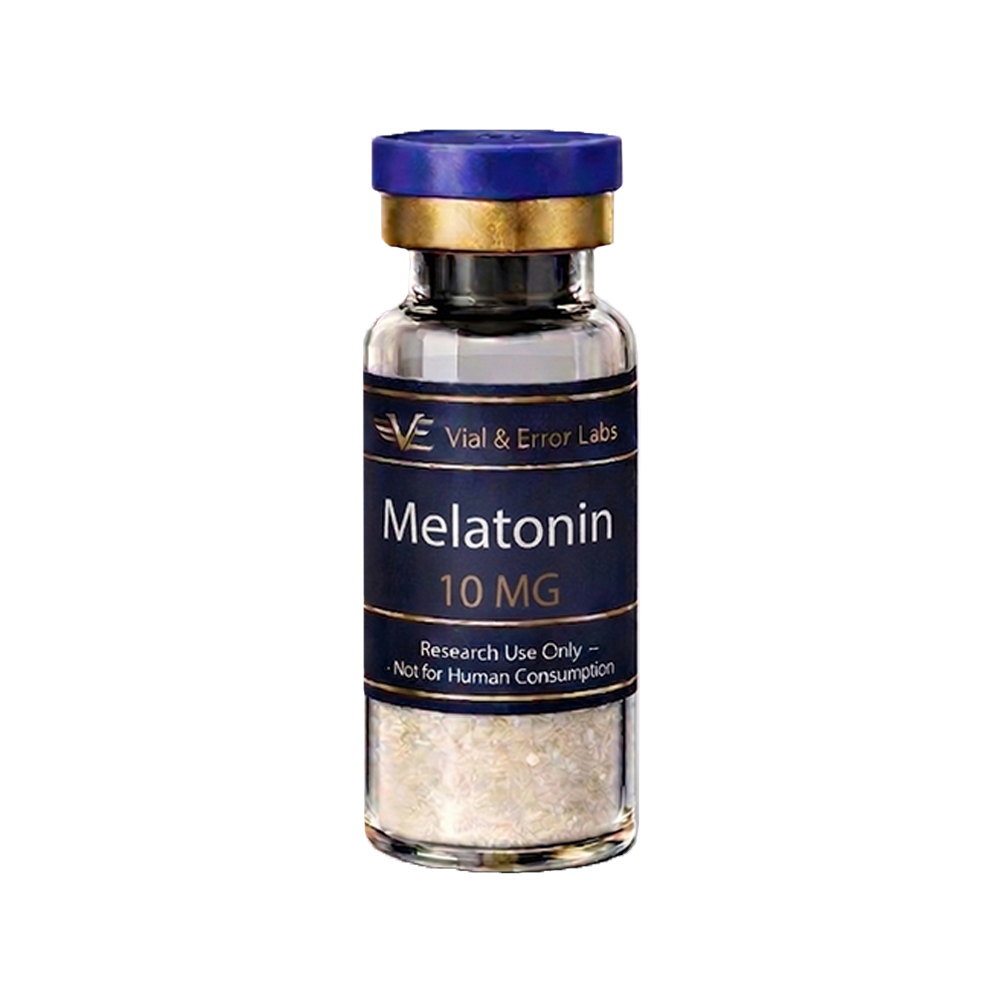
Description
-
About Melatonin (N-acetyl-5-methoxytryptamine)
Melatonin — N-acetyl-5-methoxytryptamine (CAS 73-31-4) — is an endogenous indole hormone synthesized primarily by the pineal gland from serotonin via N-acetyltransferase (NAT/AANAT) and hydroxyindole-O-methyltransferase (HIOMT). It is the primary hormonal signal of circadian night and mediates its effects through membrane MT1/MT2 receptors (GPCRs) and nuclear ROR/RZR receptors. Beyond its role as a circadian signal, melatonin is a potent direct free radical scavenger and indirect antioxidant (upregulating SOD, catalase, GPx) with documented actions at the mitochondria. As a research tool, it is used to study circadian clock gene regulation (BMAL1, CLOCK, PER, CRY), MT1/MT2 receptor pharmacology, oxidative stress models, and mitochondrial membrane potential. Supplied as crystalline free base for analytical and non-clinical research use only.
COMMON RESEARCH APPLICATIONS
MT1/MT2 Receptor Pharmacology
Melatonin acts on Gi-coupled MT1 and MT2 GPCRs. Used in cAMP inhibition assays, BRET/FRET receptor internalization studies, and radioligand binding (2-[¹²⁵I]iodomelatonin displacement) to characterize melatonin receptor pharmacology at picomolar to nanomolar concentrations.Circadian Clock Gene Regulation
Synchronizes the molecular clock via MT1/MT2-mediated SCN signaling. Used in circadian gene expression assays (BMAL1, PER1/2, CLOCK luciferase reporters) in SCN explants and synchronized cell models to study melatonin phase-shifting and amplitude modulation.Oxidative Stress & Mitochondrial Research
Direct ROS scavenger (hydroxyl radical, peroxynitrite) and indirect antioxidant via SOD/catalase/GPx upregulation. Used in H₂O₂ and rotenone challenge models to study mitochondrial membrane potential (JC-1, TMRE assays) and mitophagy signaling.Nuclear Receptor (RORα/RZRβ) Studies
Melatonin acts as a ligand for nuclear ROR receptors, modulating clock gene transcription. Used in reporter gene assays and ChIP studies examining RORα/RZRβ-mediated gene regulation in cancer cell lines and immune models. -
Chemical Identity
Compound Name: Melatonin
Synonyms: N-acetyl-5-methoxytryptamine · MLT · pineal hormone · MEL · melatonine
CAS Number: 73-31-4
EC Number: 200-797-7
Molecular Formula: C₁₃H₁₆N₂O₂
Molecular Weight: 232.28 g/mol
Physical Properties
Appearance: White to off-white crystalline powder
Solubility (water): ~0.5 mg/mL in water; improved solubility at acidic pH
Solubility (organic): Freely soluble in ethanol (~50 mg/mL); soluble in DMSO (~25 mg/mL), DMF
Hygroscopic: Mildly
Quality & Testing
Purity: ≥98% (HPLC)
Testing Method : Reverse-phase HPLC · UV absorbance (278 nm)
Verification
COA: Lot-specific, included with order (QR on label)
SDS Supplier : See SDS/MSDS · OSHA HCS / GHS compliant
Handling & Storage
Storage Temperature: Store desiccated at −20°C long-term; 2–8°C short-term. Protect from light. Refers to SDS/COA for compound-specific handling.
Light Sensitivity: Protect from light (photolabile)
Reconstitution: Dissolve in ethanol (~50 mg/mL) then dilute into aqueous buffer; or dissolve directly in DMSO (~25 mg/mL)
Available Strengths:
SKU (10 mg): VE-MEL-010
-
-
What is this product?
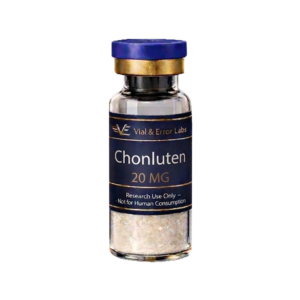
Melatonin (N-acetyl-5-methoxytryptamine) is supplied as a lyophilized/crystalline free base (CAS 73-31-4, MW 232.28 g/mol) for laboratory research use only. It is the primary endogenous circadian hormone synthesized by the pineal gland.
-
What purity and testing methods are used?
Each lot is tested by reverse-phase HPLC and UV absorbance at 278 nm to ≥98% purity. A lot-specific COA is included with every order, accessible via QR code on the label.
-
What are the key chemical identifiers?
CAS 73-31-4 · EC Number 200-797-7 · Molecular formula C₁₃H₁₆N₂O₂ · MW 232.28 g/mol · Synonyms: N-acetyl-5-methoxytryptamine, MLT, pineal hormone, melatonine.
-
How is melatonin reconstituted for research use?
Dissolve in ethanol at ~50 mg/mL as a stock, then dilute into aqueous buffer (PBS, cell culture media). Alternatively, dissolve in DMSO (~25 mg/mL). Aqueous solubility is low (~0.5 mg/mL). Protect from light at all stages — melatonin is photolabile.
-
What receptor targets does melatonin act on in research models?
Melatonin acts on membrane MT1 and MT2 GPCRs (Gi-coupled, picomolar affinity) and nuclear RORα/RZRβ receptors (low-affinity, high-concentration binding). MT1/MT2 selective ligands (4-P-PDOT, luzindole) are used as pharmacological tools to distinguish receptor contributions.
-
What is the recommended storage upon receipt?
Store at −20°C desiccated and protected from light. Melatonin is photolabile and will degrade under UV or prolonged visible light exposure. Do not store in clear containers. Inspect for white crystalline appearance upon receipt.
-
What is a COA and why does it matter?
A COA documents lot-specific purity (HPLC ≥98%), identity (UV 278 nm), and appearance. Each melatonin lot ships with a QR-accessible COA. Review before use to confirm purity and photostability status.
-
What is this product?
Reviews
There are no reviews yet.