


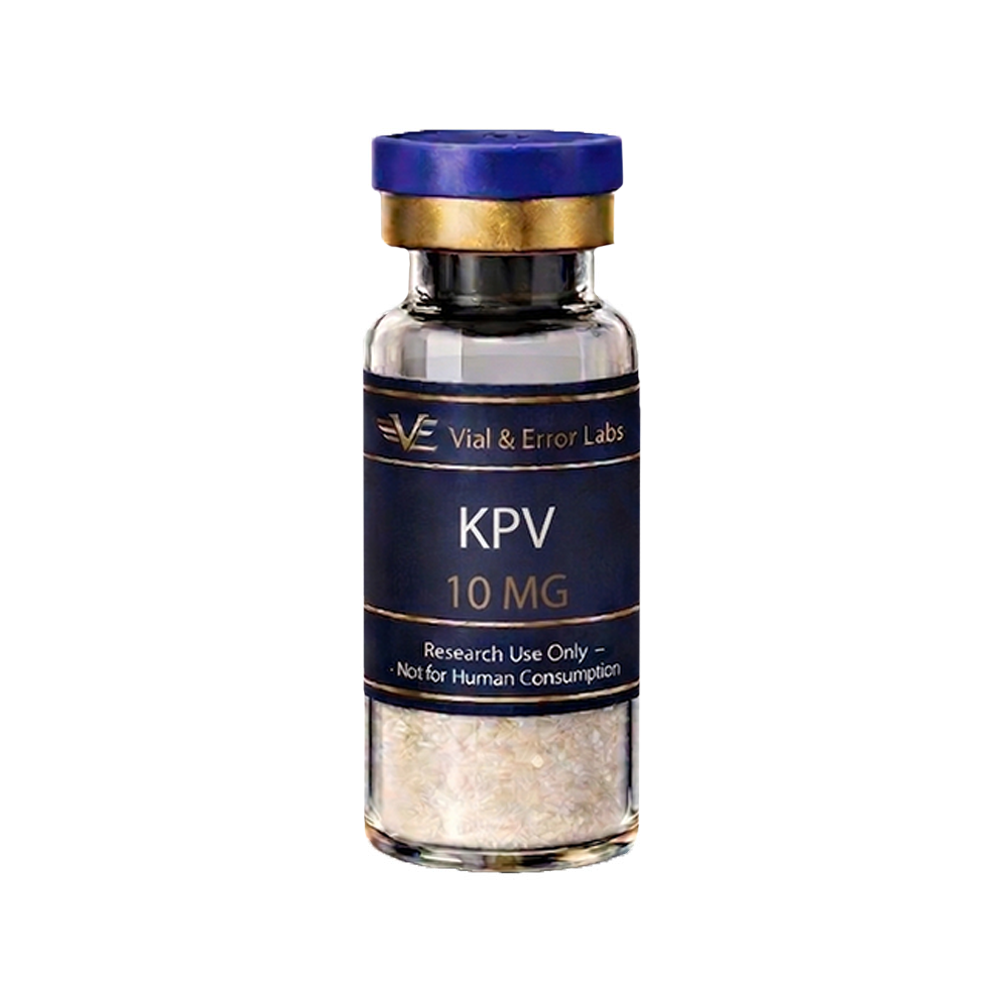
Description
-
About KPV
KPV — Lys-Pro-Val (CAS 65982-89-0) — is a C-terminal tripeptide fragment of α-MSH (α-melanocyte-stimulating hormone) that retains the core anti-inflammatory signaling properties of the full 13-amino acid peptide. It is supplied as a laboratory-grade lyophilized powder intended strictly for analytical and non-clinical research applications.
α-MSH exerts its anti-inflammatory effects through melanocortin receptors (MC1R, MC3R) and by directly modulating NF-κB signaling in immune and epithelial cells. KPV, as the minimal bioactive fragment, has been shown to penetrate intestinal epithelial cells and access intracellular targets independent of surface receptor binding — a mechanistically distinct feature that makes it valuable for studying non-receptor-mediated melanocortin anti-inflammatory pathways. Researchers use KPV in HT-29, Caco-2 intestinal epithelial, and RAW 264.7 macrophage models to study NF-κB pathway suppression, IL-8/TNF-α cytokine modulation, skin barrier integrity, and mucosal immune signaling under inflammatory challenge conditions.
COMMON RESEARCH APPLICATIONS
Intestinal Epithelial Inflammation & Barrier Research
KPV is examined in Caco-2 and HT-29 intestinal epithelial models under LPS or IL-1β challenge to study NF-κB p65 pathway suppression, IL-8/TNF-α cytokine attenuation, tight junction protein expression (ZO-1, occludin), and TEER restoration as barrier integrity endpoints.Skin Inflammation & Melanocortin Signaling
Used in HaCaT keratinocyte and HDFa fibroblast models to examine α-MSH C-terminal fragment activity on MC1R-independent NF-κB suppression, IL-6/IL-8 secretion, and Nrf2-mediated antioxidant pathway activation under inflammatory challenge.Intracellular Peptide Penetration Studies
KPV s small size enables cellular uptake independent of surface receptor engagement. Used in confocal microscopy and cell fractionation assays to study intracellular distribution, NF-κB nuclear translocation inhibition, and receptor-independent vs. receptor-dependent anti-inflammatory mechanisms.Comparative α-MSH Fragment Benchmarking
Benchmarked against full-length α-MSH (13 aa), Ac-α-MSH, and tripeptide analogs in MC1R/MC3R pharmacology assays to characterize the minimal active pharmacophore for anti-inflammatory activity and receptor-binding vs. receptor-independent potency ratios. -
Chemical Identity
Compound Name: KPV
Internal Catalog Code: KPV
CAS Number: 65982-89-0
Molecular Formula: C16H29N5O4
Molecular Weight: 355.44 g/mol
Physical Properties
Form/Appearance: Lyophilized powder
Quality & Testing
Purity:
Testing Method : HPLC (as applicable) · identity confirmation per COA
Verification
COA: Lot-specific, included with order (QR on label)
Handling & Storage
Storage Temperature: Store desiccated at −20°C for long-term; 2–8°C short-term. Protect from light. Refer to SDS/COA for compound-specific handling.
Light Sensitivity: Protect from light
Moisture: Store desiccated when applicable
Available Strengths: 10 mg
SKU (10 mg): VE-KPVX-010
-
-
What is this product?
KPV (Lys-Pro-Val, CAS 65982-89-0, MW 355.44 g/mol, C₁₆H₂₉N₅O₄) is supplied as a lyophilized synthetic tripeptide — the C-terminal anti-inflammatory fragment of α-MSH — for laboratory research use only. Available as VE-KPVX-010 (10 mg).
-
What purity and testing methods are used?
Each lot is tested by reverse-phase HPLC and MS confirmation to ≥98% purity with sequence verification. A lot-specific COA is included with every order, accessible via QR code on the label.
-
What are the key chemical identifiers?
CAS 65982-89-0 · Molecular formula C₁₆H₂₉N₅O₄ · MW 355.44 g/mol · Sequence: Lys-Pro-Val · Synonyms: α-MSH(11-13), melanocortin C-terminal tripeptide, KPV tripeptide.
-
How is KPV reconstituted for research use?
Dissolve in sterile water or PBS (pH 7.0) at ~5 mg/mL. Use immediately or aliquot and store at −80°C. Avoid repeated freeze-thaw cycles. Protect from light.
-
What is the recommended storage upon receipt?
Store immediately at −20°C desiccated. Short-term at 2–8°C acceptable for up to 2 weeks. Inspect vials for integrity upon receipt.
-
What is a COA and why does it matter?
A COA documents lot-specific purity (HPLC ≥98%), sequence verification (MS: Lys-Pro-Val confirmed), and appearance. Each KPV lot ships with a QR-accessible COA. Review before use to confirm identity and purity meet your experimental requirements.
-
What is this product?
Reviews
There are no reviews yet.