


MOTS-c: The Mitochondrial-Derived Peptide Reshaping Metabolic Research

What Is MOTS-c?
MOTS-c (Mitochondrial Open Reading Frame of the Twelve S rRNA type-c) is a 16-amino-acid peptide encoded by the mitochondrial genome. First described by Dr. Changhan Lee and colleagues at the University of Southern California in 2015, MOTS-c represents a class of signaling molecules called mitochondrial-derived peptides (MDPs) — peptides encoded within the mitochondrial DNA that function as retrograde signaling molecules, communicating from mitochondria back to the nucleus and other cellular compartments.
This discovery was significant because it challenged the traditional view of mitochondria as purely energy-producing organelles. The identification of MOTS-c and other MDPs demonstrated that mitochondria actively participate in cellular signaling and metabolic regulation through peptide-mediated communication.
Mechanism of Action
AMPK Pathway Activation
The primary documented mechanism of MOTS-c involves activation of AMP-activated protein kinase (AMPK), a master regulator of cellular energy homeostasis. Published research has shown that MOTS-c activates AMPK by modulating the folate-methionine cycle, which indirectly affects the cellular AMP:ATP ratio. This is distinct from direct AMPK activators like AICAR, which mimic AMP allosterically.
Nuclear Translocation
A particularly notable finding is that MOTS-c has been observed to translocate to the nucleus under metabolic stress conditions. Once in the nucleus, it interacts with transcription factors involved in antioxidant response and metabolic gene regulation. This nuclear translocation has been documented in both cell culture and mouse models, representing a novel signaling paradigm for a mitochondrial-encoded peptide.
Research Applications
Metabolic Signaling Models
The most active area of MOTS-c research involves metabolic regulation. In mouse models, MOTS-c administration has been associated with improved glucose homeostasis, increased insulin sensitivity, and prevention of diet-induced obesity. These effects appear mediated through the AMPK pathway and downstream metabolic gene regulation.
Exercise Biology
MOTS-c has been described as an “exercise mimetic” in research contexts — meaning it activates some of the same metabolic pathways that physical exercise engages. Published studies have shown that circulating MOTS-c levels increase in response to exercise in humans, and that exogenous MOTS-c administration in sedentary mice produces some metabolic adaptations similar to those seen with exercise training.
Aging Research
Because mitochondrial function declines with age, and because endogenous MOTS-c levels appear to decrease in older organisms, the peptide has attracted interest in aging research. Studies in aged mice have shown that MOTS-c treatment improved physical capacity and metabolic parameters. However, this research is in early stages and no conclusions about human aging should be drawn from these animal models.
Current Limitations
MOTS-c research is newer than most peptide fields — the initial discovery paper was published in 2015. While the mechanistic work is compelling, the total volume of published research is smaller than longer-established peptides like BPC-157 or Thymosin Beta-4. Replication across independent laboratories is ongoing.
Additionally, the pharmacokinetics of exogenous MOTS-c in vivo are not fully characterized. Questions remain about bioavailability, half-life, and optimal dosing parameters in research models.
Specifications
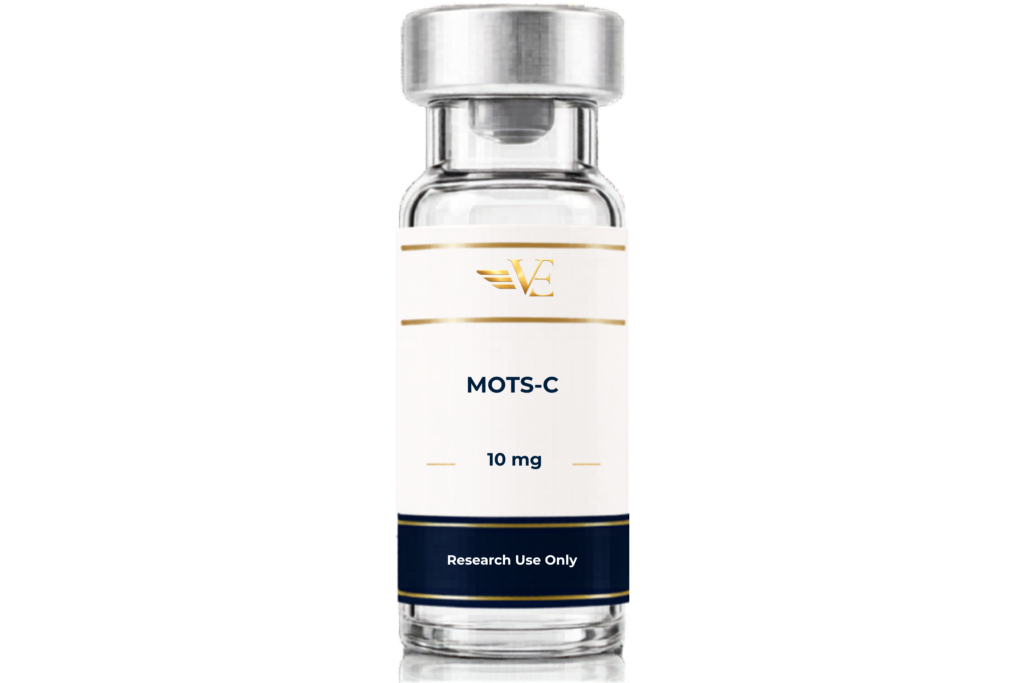
Form: Lyophilized powder. Purity: 98%+ (HPLC). Storage: -20°C. Available strength: 10 mg.
MOTS-c from Vial & Error Labs ships with a COA and SDS documentation.
Keep reading
All articles →
What Is Gonadorelin Acetate? A Research Overview
Gonadorelin is a synthetic decapeptide, a chain of ten amino acids, with the same sequence as natural gonadotropin-releasing hormone (GnRH). Gonadorelin acetate is its…

What Is R3T4? A Plain-Language Guide for Researchers
R3T4 is the Vial & Error catalog name for this GLP-3 research peptide, a synthetic peptide studied in laboratory models for its activity at…

TB-500: Actin Dynamics, Cell Migration, and Preclinical Research Models
TB-500 is one of the most studied thymosin beta-4 fragments in preclinical research. Here’s what the published literature says about its mechanism and applications.
Primary sources
Research References
Our index of PubMed literature searches and PubChem records for 50 compounds: 16 in the Vial & Error catalog and 34 background literature entries. Each entry links to primary sources and, where one exists, our certificate of analysis, product page and research article.
Research assistant
Ask Kim
Questions about a compound's specifications, certificate of analysis or the published research we cite? Kim answers from our product data, COA records and research references. Every answer is labeled with where it comes from.
Not medical advice. Please don't enter personal information.