


Description
-
Bacteriostatic Water
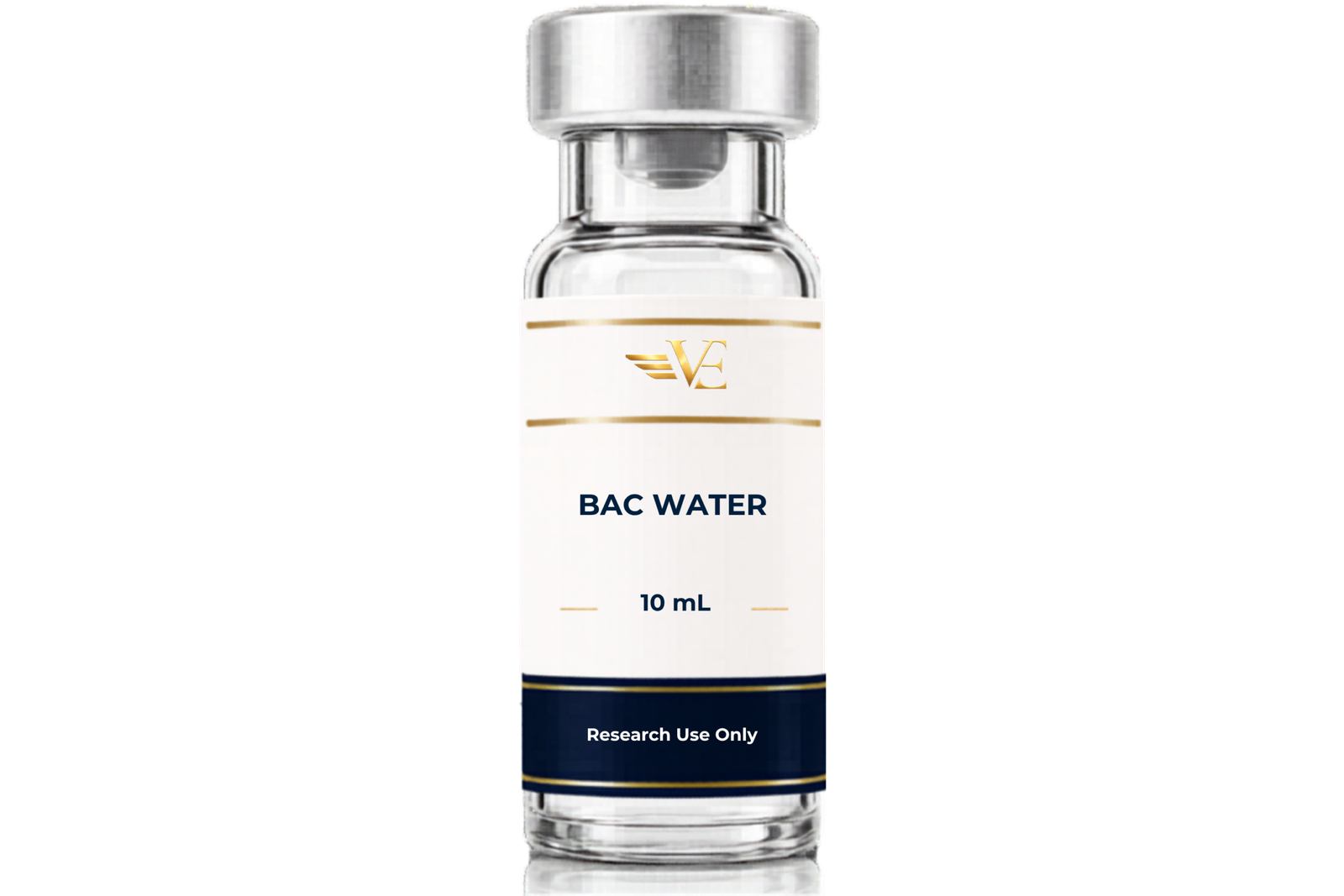
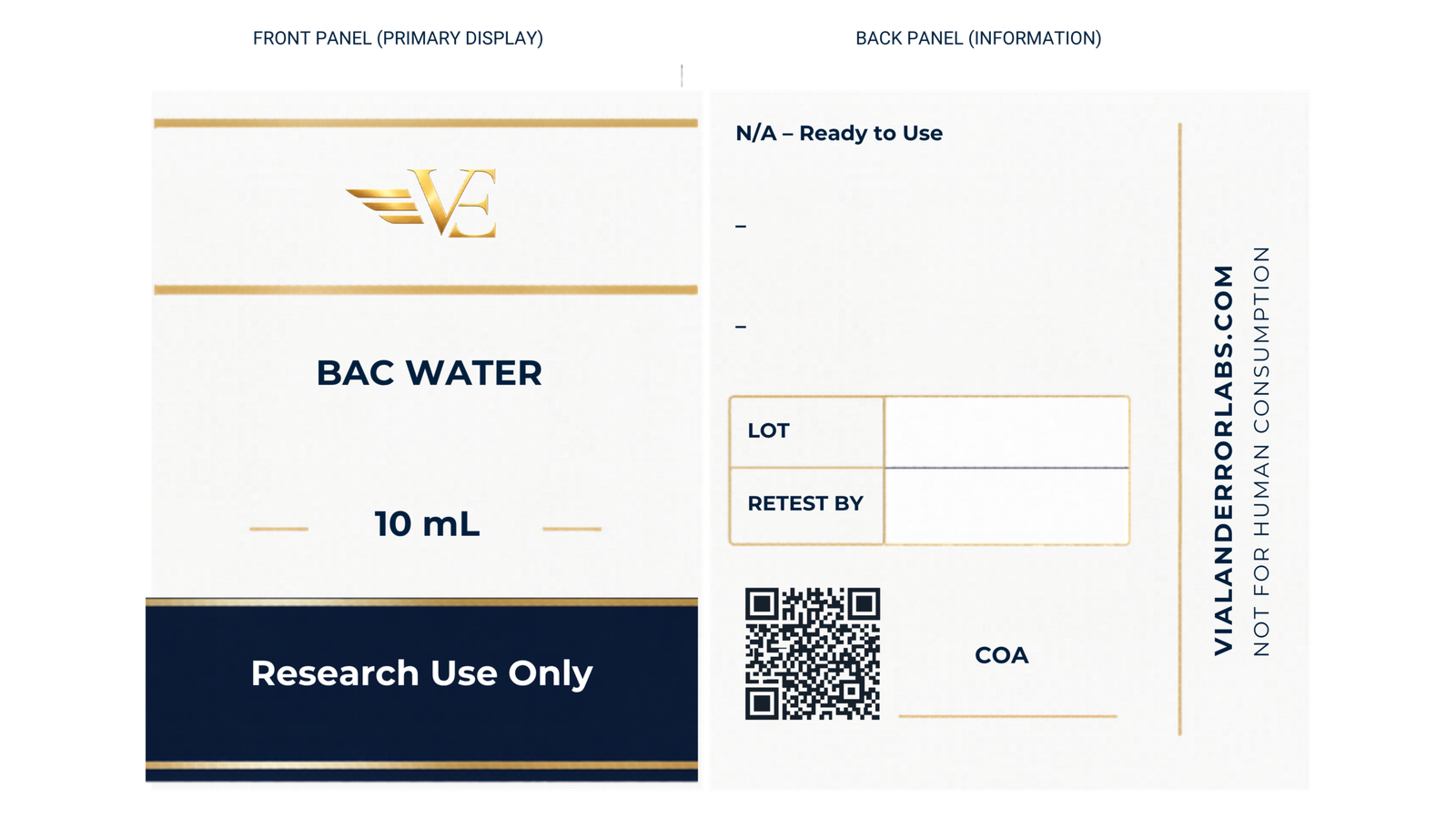
Bacteriostatic water (BAC water) is sterile water for injection containing 0.9% benzyl alcohol (w/v) as a bacteriostatic preservative. It is supplied as a laboratory-grade reconstitution vehicle for lyophilized research compounds and intended strictly for analytical and non-clinical research applications.
Benzyl alcohol at 0.9% (w/v) inhibits the growth of bacteria introduced during repeated vial punctures without sterilizing the solution. This makes BAC water the standard reconstitution vehicle in peptide research workflows where a single vial of lyophilized compound is accessed across multiple sessions. Unlike single-use sterile water, BAC water-reconstituted solutions can be stored refrigerated and drawn from multiple times without rapid microbial compromise — provided proper aseptic technique is maintained.
PRIMARY RESEARCH USES
Lyophilized Peptide Reconstitution
BAC water is the standard vehicle for dissolving lyophilized research peptides (GHRPs, GHRHs, melanocortin analogs, and other polypeptides) for use in cell-based assays, ex vivo tissue studies, and in vitro receptor binding experiments.Multi-Draw Research Vial Preservation
The benzyl alcohol preservative maintains bacteriostatic conditions across repeated vial access events, making BAC water the preferred reconstitution vehicle when a peptide stock will be accessed over multiple experimental sessions under refrigerated storage.Stability-Extending Reconstitution Vehicle
Compared to plain sterile water, BAC water-reconstituted peptide solutions retain sterility for extended periods under 2–8°C storage when proper technique is used, reducing waste and improving consistency across longitudinal research protocols. -
Chemical Identity
Product Name: Bacteriostatic Water for Injection
Preservative: Benzyl alcohol 0.9% (w/v)
CAS (Benzyl Alcohol): 100-51-6
Vehicle: Water for Injection (WFI)
pH: 4.5–7.0
Physical Properties
Appearance: Clear, colorless sterile solution
Osmolarity: ~9 mOsmol/L (hypotonic — dilutes upon reconstitution)
Preservative Action: Bacteriostatic — inhibits microbial growth; does not sterilize
Quality & Testing
Sterility: Sterile filtered · endotoxin tested
Benzyl Alcohol Content: 0.9% (w/v) verified per lot
Documentation: Lot-specific documentation included with order
Verification
COA: Lot-specific, included with order
SDS Supplier: Velox Research Chemicals
SDS Revision: Current lot · OSHA HCS / GHS compliant
Handling & Storage
Storage Temperature: Store at 20–25°C (room temperature); refrigerate after first use. Do not freeze.
Shelf Life: Per lot expiration date — do not use beyond printed date
After Opening: Refrigerate at 2–8°C; use within 28 days of first puncture with proper aseptic technique
Available Sizes: 10 mL · 30 mL
SKU (10 mL): VE-BACW-010
SKU (30 mL): VE-BACW-030
-
-
What is this product?
BPC-157 is supplied as a lyophilized 15-amino acid pentadecapeptide (CAS 1628202-19-6, MW 1419.50 g/mol) intended for laboratory research use only. Also known as Body Protection Compound-157 (Bepecin).
-
What purity and testing methods are used?
Each lot is tested by reverse-phase HPLC and MS confirmation to ≥98% purity with sequence verification. A lot-specific COA is included with every order, accessible via QR code on the label.
-
What are the key chemical identifiers?
CAS 1628202-19-6 · Molecular formula C₆₂H₉₈N₁₆O₂₂ · MW 1419.50 g/mol · Synonyms: Body Protection Compound-157, Bepecin, PL 14736, pentadecapeptide BPC.
-
How is BPC-157 reconstituted for research use?
Dissolve in sterile water or PBS (pH 7.4) at ~1 mg/mL. Use immediately after reconstitution or aliquot and store at −80°C to prevent degradation. Avoid repeated freeze-thaw cycles. Protect from light.
-
What signaling pathways does BPC-157 affect in research models?
BPC-157 has been studied for effects on FAK/paxillin signaling in fibroblasts, VEGFR2-mediated angiogenesis in endothelial cells, and nitric oxide (NO) synthase modulation. It is also studied for growth hormone receptor pathway interactions in preclinical models.
-
What is the recommended storage upon receipt?
Store immediately at −20°C in a desiccated environment. For long-term stability, −80°C is preferred. Short-term at 2–8°C is acceptable. Inspect vials for integrity upon receipt.
-
What is a COA and why does it matter?
A COA documents lot-specific results including purity (HPLC ≥98%), sequence verification (MS), and appearance. Each lot ships with a QR-accessible COA. Review before use to confirm identity and purity meet your experimental requirements.
-
What is this product?
-
Benzyl Alcohol Preservative — Safety & Compatibility Data
USP monograph reference · bacteriostatic water for injection
View USP ReferencePubChem Compound Record — Benzyl Alcohol
Full chemical data, safety, bioassay data
View RecordSource Document / Insert
Supplier insert or supporting SDS source
Download PDF