

Description
-
Kisspeptin-10
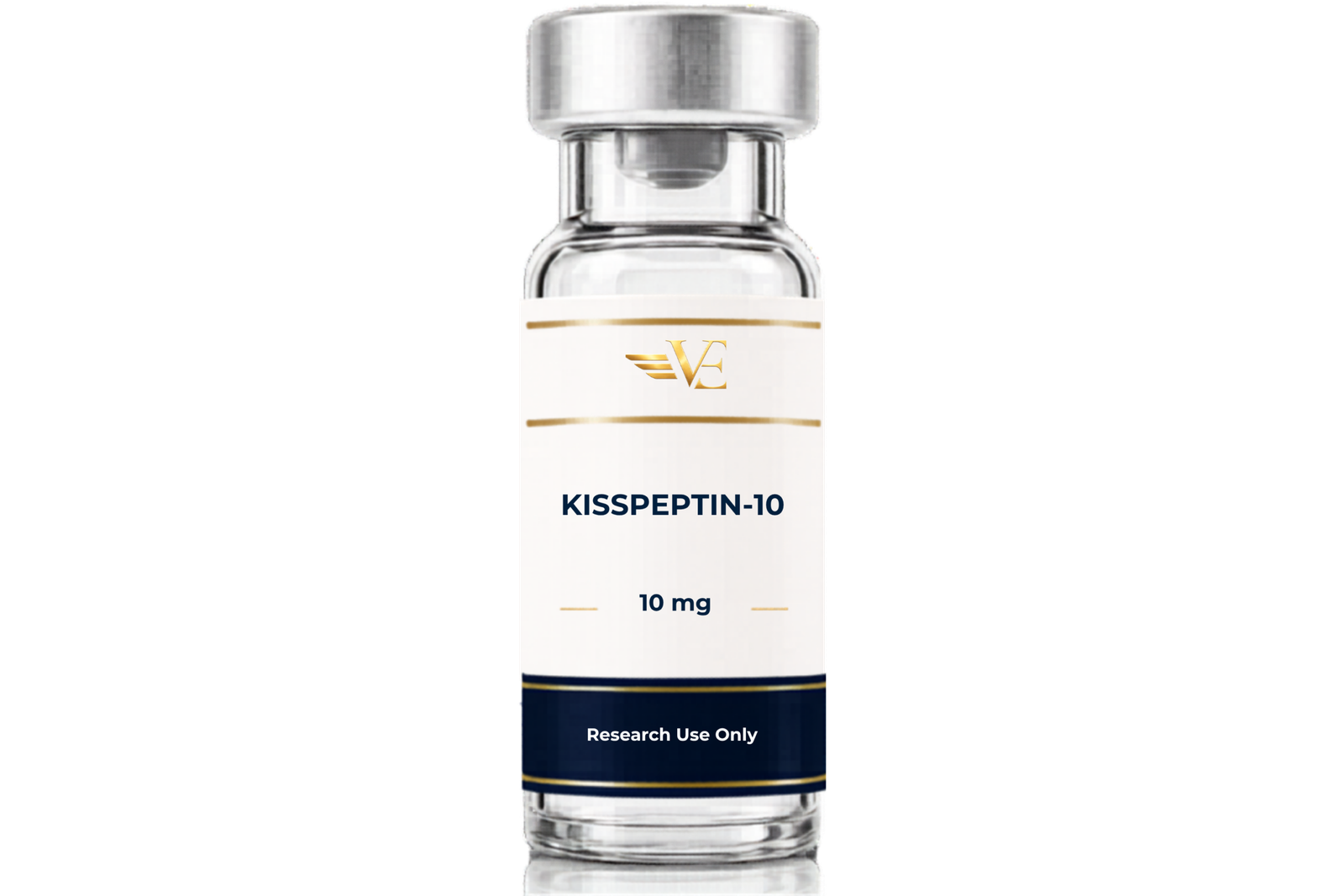
Kisspeptin-10 — Tyr-Asn-Trp-Asn-Ser-Phe-Gly-Leu-Arg-Phe-NH₂ (CAS 374683-26-8) — is the synthetic C-terminal decapeptide of kisspeptin-54 (metastin) and the minimal sequence required for full GPR54/KISS1R receptor activation. It is supplied as a laboratory-grade lyophilized powder intended strictly for analytical and non-clinical research applications.
Kisspeptin neurons in the arcuate nucleus and anteroventral periventricular nucleus function as the primary GnRH pulse generators in the hypothalamus. Kisspeptin-10's high affinity for GPR54/KISS1R makes it the standard tool compound for in vitro HPG axis research, allowing investigators to activate GnRH neuron signaling cascades, characterize receptor downstream events (IP₃, intracellular Ca²⁺ mobilization), and model the neuroendocrine control of gonadotropin secretion without the variability introduced by the full-length peptide.
COMMON RESEARCH APPLICATIONS
GnRH Neuron Signaling & HPG Axis Models
Kisspeptin-10 is used in primary hypothalamic neuron cultures and GnRH-secreting cell lines (GT1-7) to study GPR54/KISS1R-mediated GnRH pulse generation, IP₃ signaling, intracellular Ca²⁺ mobilization, and downstream cAMP/ERK pathway activation.LH & FSH Secretion Models
Applied in ex vivo pituitary explant and gonadotroph cell models to examine kisspeptin-driven LH and FSH secretion kinetics, gonadotropin pulse frequency modulation, and pituitary sensitivity to GnRH under kisspeptin-stimulated conditions.GPR54 / KISS1R Receptor Pharmacology
Used in receptor binding assays, Ca²⁺ flux studies, and IP₁ accumulation assays to characterize GPR54 agonist potency, receptor desensitization/internalization dynamics, and structure-activity relationships of kisspeptin analogs relative to the native decapeptide.Metabolic-Reproductive Interface Research
Examined in hypothalamic neuron and energy-sensing cell models to study how nutritional status signals (leptin, insulin, ghrelin) modulate kisspeptin neuron activity, linking metabolic state to HPG axis regulation and reproductive function. -
Chemical Identity
Compound Name: Kisspeptin-10
Synonyms: Metastin(45-54) · KP-10 · KISS1 decapeptide · Tyr-Asn-Trp-Asn-Ser-Phe-Gly-Leu-Arg-Phe-NH₂
CAS Number: 374683-26-8
EC Number: N/A (synthetic decapeptide)
Peptide Length: 10 amino acids · C-terminal amide
Molecular Weight: ~1,302.5 g/mol
Physical Properties
Appearance: White to off-white lyophilized powder
Solubility (water): ~1 mg/mL in sterile water or PBS (pH 7.0)
Solubility (organic): Slight DMSO solubility; aqueous reconstitution preferred
Hygroscopic: Yes — store desiccated
Quality & Testing
Purity: ≥98% (HPLC)
Testing Method: Reverse-phase HPLC · MS confirmation of peptide sequence
Verification
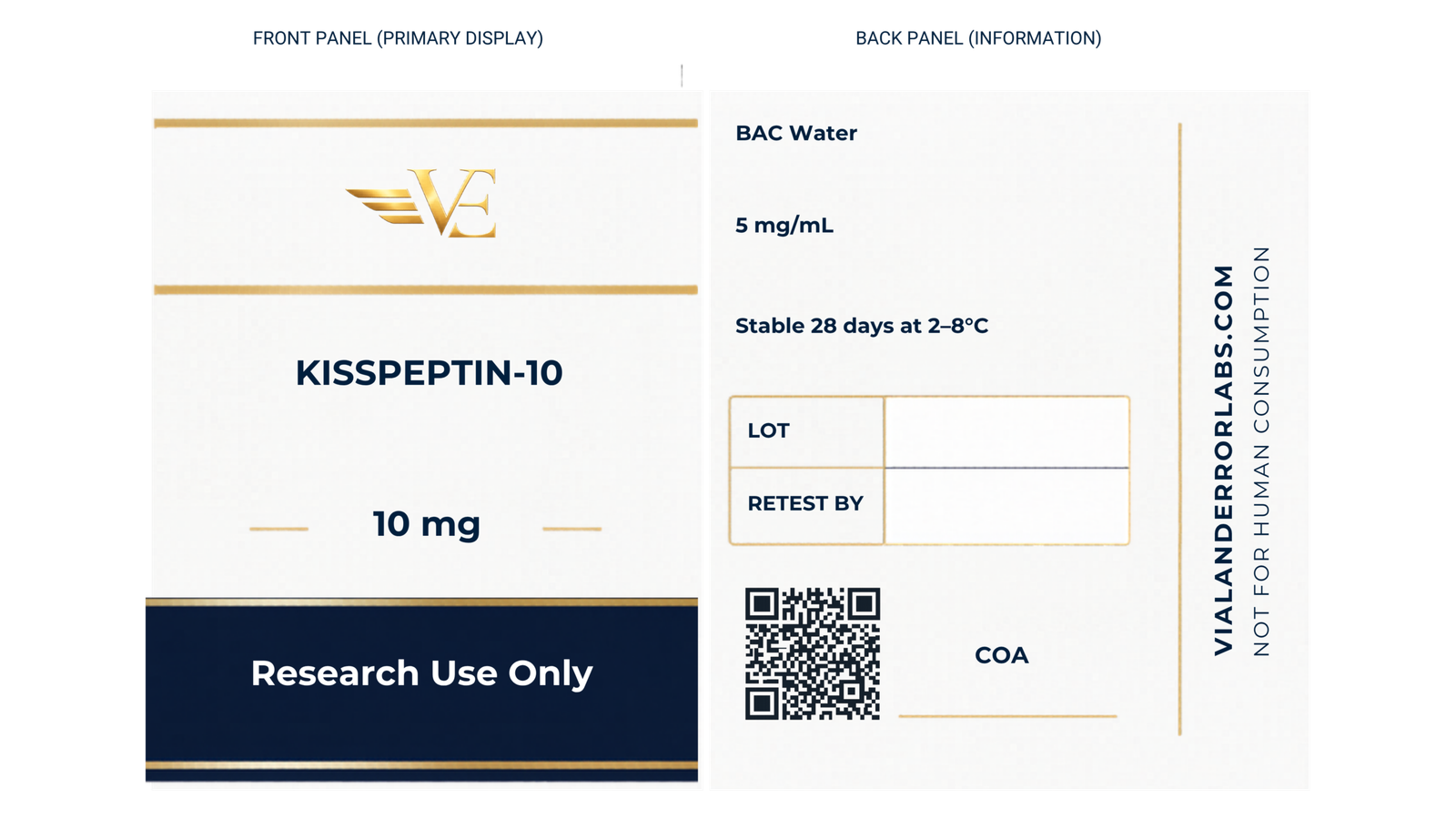
COA: Lot-specific, included with order (QR on label)
SDS Supplier: Velox Research Chemicals
SDS Revision: Current lot · OSHA HCS / GHS compliant
Handling & Storage
Storage Temperature: Store desiccated at −20°C for long-term; 2–8°C short-term. Protect from light. Refer to SDS/COA for compound-specific handling
Light Sensitivity: Moderate — tryptophan residue is UV-sensitive; minimize light exposure during handling
Reconstitution: Dissolve in sterile water or PBS (pH 7.0) at ~1 mg/mL; aliquot and store at −80°C
Available Strengths: 1 mg · 5 mg
SKU (1 mg): VE-KP10-001
SKU (5 mg): VE-KP10-005
-
-
What is this product?
BPC-157 is supplied as a lyophilized 15-amino acid pentadecapeptide (CAS 1628202-19-6, MW 1419.50 g/mol) intended for laboratory research use only. Also known as Body Protection Compound-157 (Bepecin).
-
What purity and testing methods are used?
Each lot is tested by reverse-phase HPLC and MS confirmation to ≥98% purity with sequence verification. A lot-specific COA is included with every order, accessible via QR code on the label.
-
What are the key chemical identifiers?
CAS 1628202-19-6 · Molecular formula C₆₂H₉₈N₁₆O₂₂ · MW 1419.50 g/mol · Synonyms: Body Protection Compound-157, Bepecin, PL 14736, pentadecapeptide BPC.
-
How is BPC-157 reconstituted for research use?
Dissolve in sterile water or PBS (pH 7.4) at ~1 mg/mL. Use immediately after reconstitution or aliquot and store at −80°C to prevent degradation. Avoid repeated freeze-thaw cycles. Protect from light.
-
What signaling pathways does BPC-157 affect in research models?
BPC-157 has been studied for effects on FAK/paxillin signaling in fibroblasts, VEGFR2-mediated angiogenesis in endothelial cells, and nitric oxide (NO) synthase modulation. It is also studied for growth hormone receptor pathway interactions in preclinical models.
-
What is the recommended storage upon receipt?
Store immediately at −20°C in a desiccated environment. For long-term stability, −80°C is preferred. Short-term at 2–8°C is acceptable. Inspect vials for integrity upon receipt.
-
What is a COA and why does it matter?
A COA documents lot-specific results including purity (HPLC ≥98%), sequence verification (MS), and appearance. Each lot ships with a QR-accessible COA. Review before use to confirm identity and purity meet your experimental requirements.
-
What is this product?
-
PubMed Literature Search — Kisspeptin-10 / GPR54
Primary literature · curated search
Open PubMedPubChem Compound Record Full chemical data, bioassays, patents
View RecordSource Document / Insert
Supplier insert or supporting SDS source
Download PDF