

Description
-
About Semaglutide (Ozempic® active ingredient)
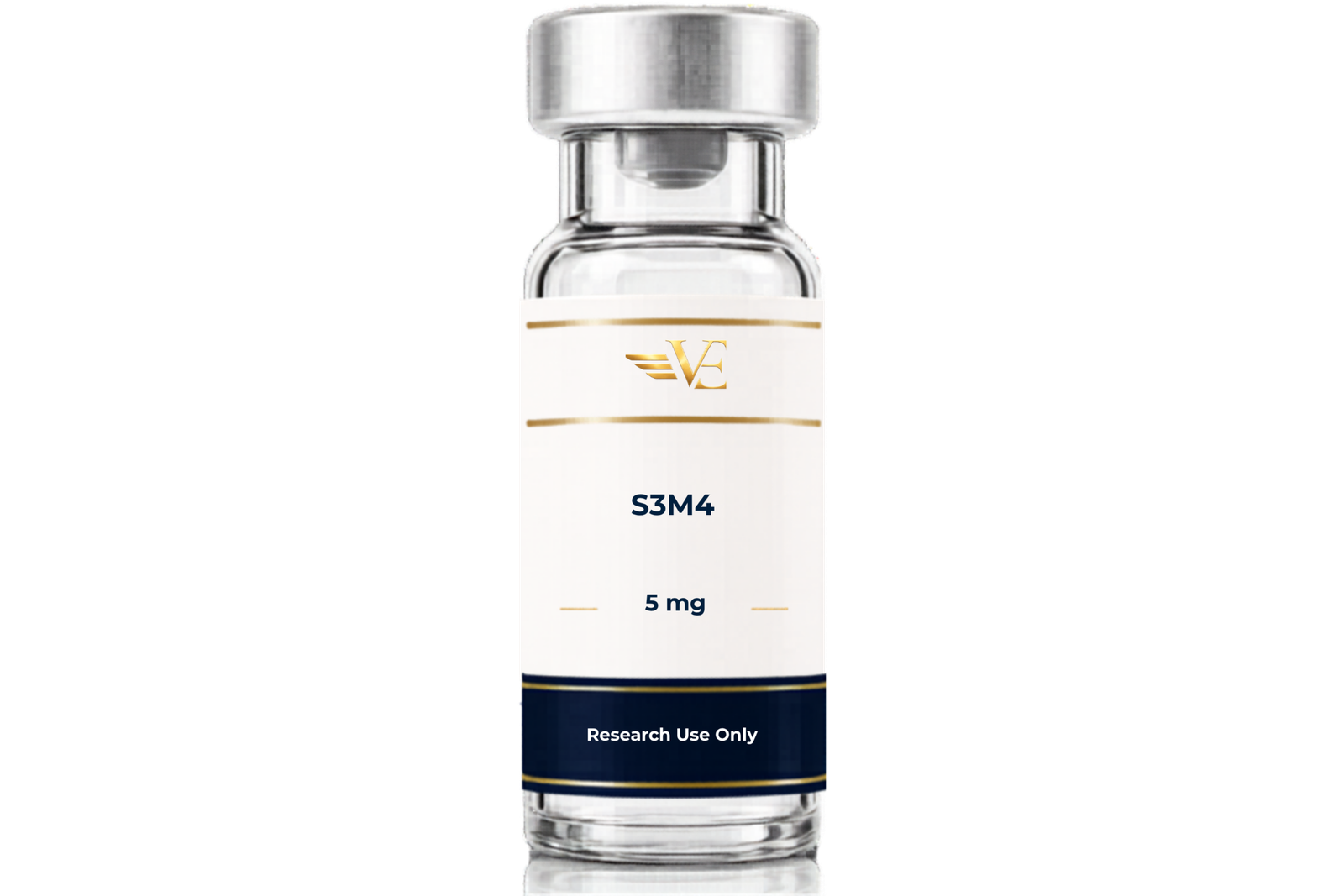
Semaglutide — the active peptide in Ozempic® and Rybelsus® (CAS 910463-68-2) — is a long-acting GLP-1 receptor agonist with a C18 fatty diacid chain enabling albumin binding and extended half-life (~165 hours). It is one of the most widely studied incretin mimetics for GLP-1 receptor pharmacology research. Unlike native GLP-1, semaglutide is resistant to DPP-4 degradation due to Aib substitution at position 8, making it a uniquely stable tool compound for GLP-1R binding, cAMP/PKA signaling cascades, and receptor internalization studies in vitro and in preclinical models. Supplied as lyophilized peptide for analytical and non-clinical research applications only. Internal catalog code: VE-S3M4.
COMMON RESEARCH APPLICATIONS
GLP-1 Receptor Binding & Signaling
Semaglutide activates GLP-1R with ~5-fold greater potency vs native GLP-1. Used to study cAMP/PKA pathway activation, β-arrestin recruitment, and receptor internalization kinetics in pancreatic β-cell lines (INS-1, MIN6) and HEK293-GLP1R models.Incretin Axis Research
Tool compound for studying GLP-1R-driven insulin secretion, glucagon suppression, and gastric emptying delay in isolated islet and enteroendocrine cell models.Metabolic Pathway Studies
Used in preclinical models examining hypothalamic appetite signaling, POMC neuron activation, and energy expenditure via GLP-1R in the CNS.Comparative GLP-1R Agonist Benchmarking
Reference standard for comparing potency and receptor dynamics of novel GLP-1R agonists including tirzepatide dual agonists and retatrutide triple agonists. -
Chemical Identity
Compound Name: Semaglutide
Synonyms: Ozempic active ingredient · Rybelsus API · NNC0113-0217 · semaglutide GLP-1 analog
CAS Number: 910463-68-2
EC Number: N/A (synthetic peptide)
Molecular Formula: C₁₈₇H₂₉₁N₄₅O₅₉
Molecular Weight: 4113.58 g/mol
Internal Catalog Code: VE-S3M4
Physical Properties
Appearance: White to off-white lyophilized powder
Solubility (water): ~1 mg/mL in sterile water or PBS (pH 7.4)
Solubility (organic): Soluble in DMSO (~5 mg/mL); limited in ethanol
Hygroscopic: Yes — store desiccated
Quality & Testing
Purity: ≥98% (HPLC)
Testing Method : Reverse-phase HPLC · MS confirmation · sequence verification
Verification
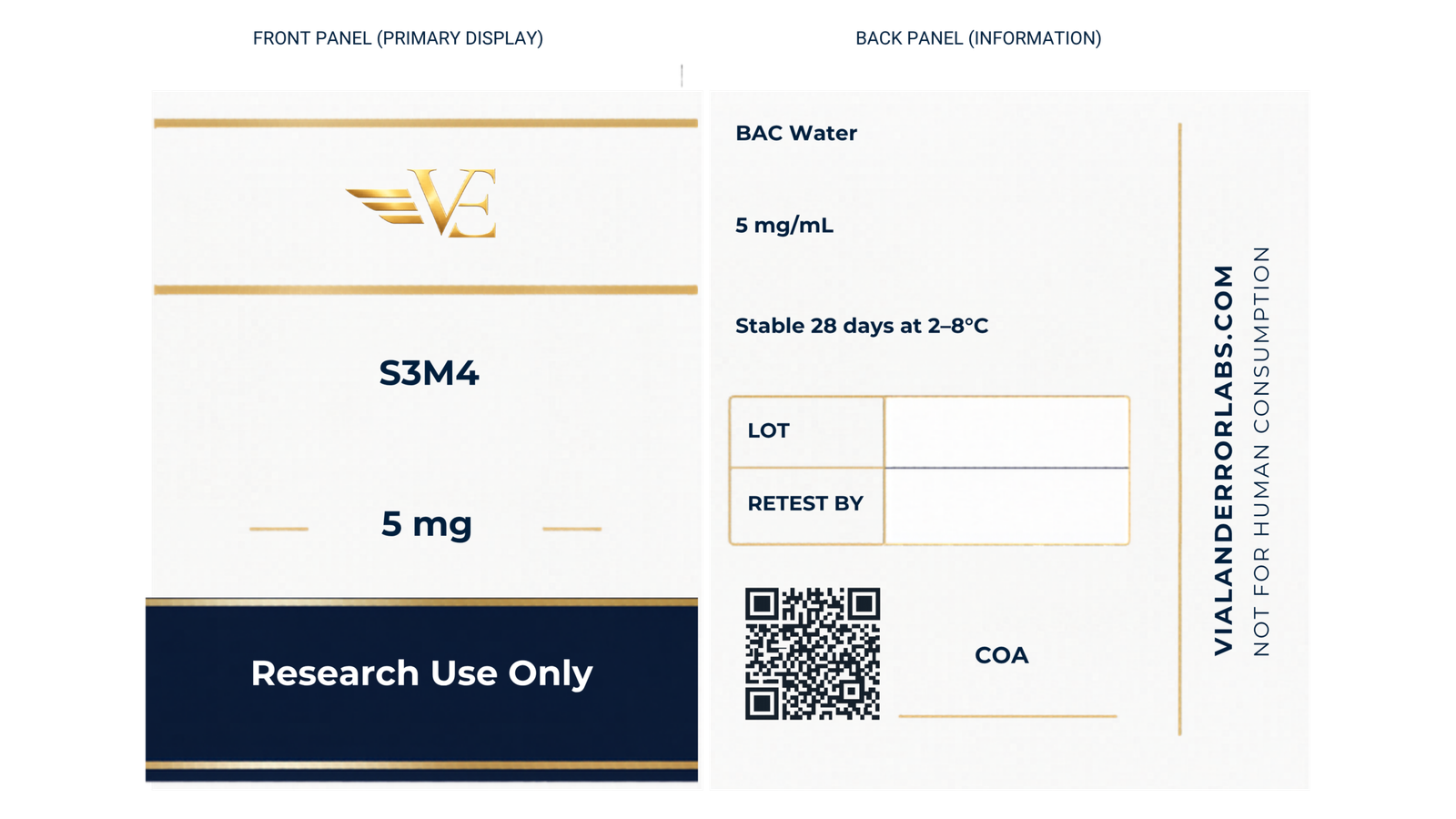
COA: Lot-specific, included with order (QR on label)
SDS Supplier : See SDS/MSDS · OSHA HCS / GHS compliant
Handling & Storage
Storage Temperature: Store desiccated at −20°C long-term; 2–8°C short-term. Protect from light. Refer to SDS/COA for compound-specific handling.
Light Sensitivity: Protect from light
Reconstitution: Dissolve in sterile water or PBS (pH 7.4); avoid repeated freeze-thaw cycles
Available Strengths: 5 mg · 10 mg · 15 mg · 20 mg · 30 mg · 40 mg
SKU (5 mg): VE-S3M4-005
SKU (10 mg): VE-S3M4-010
SKU (15 mg): VE-S3M4-015
SKU (20 mg): VE-S3M4-020
SKU (30 mg): VE-S3M4-030
SKU (40 mg): VE-S3M4-040
-
-
What is this product?
Semaglutide (VE-S3M4) is supplied as a lyophilized GLP-1 receptor agonist peptide (CAS 910463-68-2, MW 4113.58 g/mol) intended for laboratory research use only. It is the active peptide in Ozempic® and Rybelsus®.
-
What purity and testing methods are used?
Each lot is tested by reverse-phase HPLC and MS confirmation to ≥98% purity. A lot-specific COA is included with every order. Scan the QR code on the label to access your lot documentation.
-
What are the key chemical identifiers?
CAS 910463-68-2 · Molecular formula C₁₈₇H₂₉₁N₄₅O₅₉ · MW 4113.58 g/mol · Synonyms: NNC0113-0217, semaglutide GLP-1 analog, Ozempic active ingredient.
-
How is semaglutide reconstituted for research use?
Dissolve in sterile water or PBS (pH 7.4) at ~1 mg/mL. DMSO (~5 mg/mL) may be used for organic solvent applications. Store desiccated at −20°C long-term. Avoid repeated freeze-thaw cycles. Protect from light.
-
Where can I find research literature on semaglutide?
PubMed indexes 3,500+ studies on semaglutide. See the Research References section for direct PubMed and PubChem links. Key journals: Diabetes, Cell Metabolism, NEJM, JCEM.
-
What is the recommended storage upon receipt?
Upon receipt, store immediately at −20°C in a desiccated environment. Short-term storage at 2–8°C is acceptable. Do not leave at room temperature for extended periods. Inspect the vial for integrity and contact support if damaged.
-
What is a COA and why does it matter?
A Certificate of Analysis (COA) documents lot-specific analytical results including purity (HPLC), identity (MS), and appearance. Each VE-S3M4 lot ships with a COA accessible via QR code on the label. Review the COA before use to confirm identity and purity meet your research requirements.
-
What is this product?
-
PubMed Literature Search — Semaglutide
Primary literature · 3,500+ indexed studies
Open PubMedPubChem Compound Record
CAS 910463-68-2 · Full chemical data, bioassays, patents
View RecordNovo Nordisk / Supplier Product Insert
Solubility data, storage protocol, receptor binding summary
Download PDF